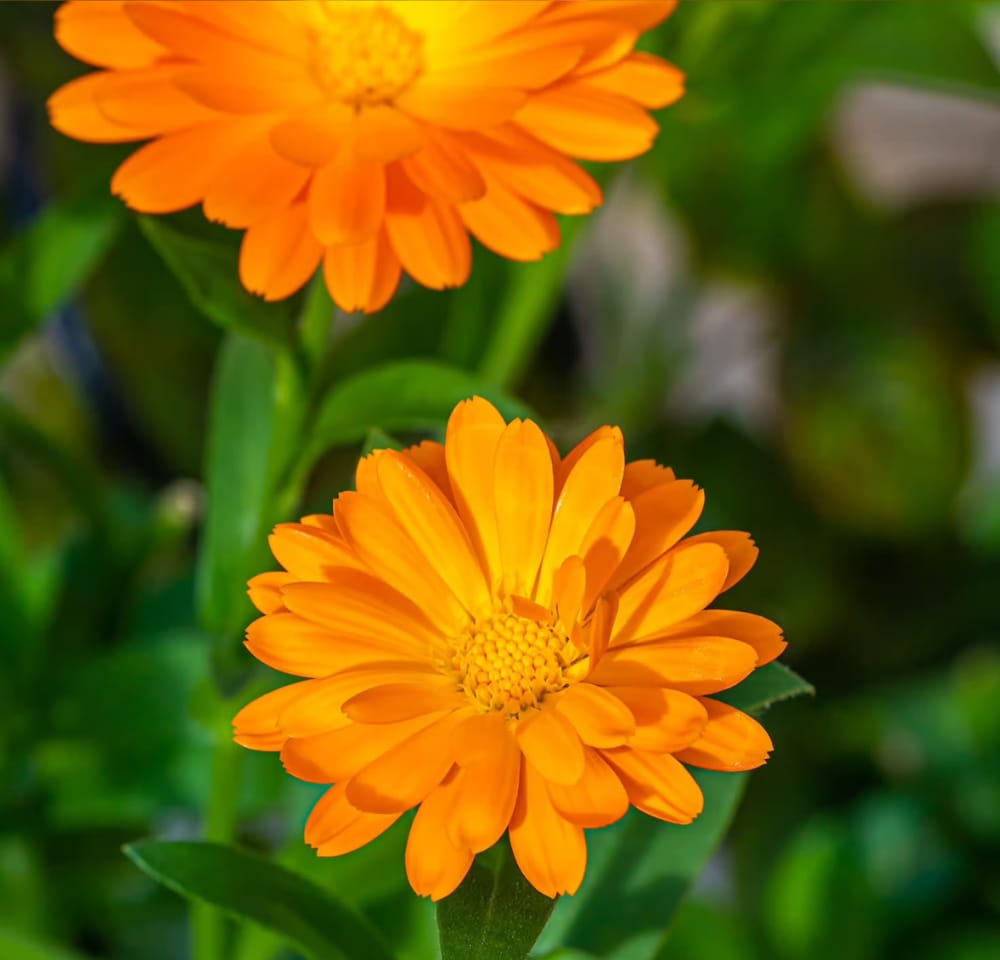
Calendula: The Golden Healer of Skin and Wounds
By Arash Bozorgmehr
What is Calendula?
Calendula (Calendula officinalis), often called pot marigold, ruddles, or Mary's gold, belongs to the daisy family and lives briefly as a fragrant perennial.
Originating in southern Europe along with some areas of western Asia, people have grown it for hundreds of years - today it thrives both in gardens and on its own throughout mild climates globally.
It typically stands between 30 and 80 centimeters high; the stems feel tacky due to fine hairs, bearing narrow-oval leaves plus vivid blooms ranging from golden-yellow to rich orange, around 4 to 7 cm across, flowering nonstop from early summer till cold weather hits. Mainly, the outer petals serve medical uses - they’re picked either fresh or dried once fully unfurled.
While different from Tagetes species like French or African marigolds, this particular kind holds genuine healing reputation, marked clearly by its scientific label "officinalis," pointing to historical use in herbal medicine.
Potential Benefits of Calendula: Centuries of Traditional Use
Calendula was valued in old Greek and Roman days for its wide-ranging health benefits. While Dioscorides highlighted its uses, Pliny also spoke well of it; later on, Hildegard of Bingen commended its strength.
In European plant-based healing, people called it "the wound herb." When fresh, its petals went straight onto injuries - used for burns, swelling from cuts, or skin irritation. A strong brew cleaned infected wounds while also helping sore gums, throat pain, or mouth sores when swished around.
Healers made flower teas to aid digestion, balance periods, or calm mild anxiety. Skin issues like rashes, sun damage, swollen veins, or diaper irritation found relief with calendula creams. Traditional Indian and Greco-Arabic systems saw it reducing inner heat; they valued it for cleansing the blood and removing impurities.
In the American Civil War - also during the two World Wars - calendula blooms served in field clinics as germ-killing wraps once regular materials were gone. The flower’s eatable parts, meanwhile, tinted dairy goods like butter and cheese, which led folks to call it “the poor person’s saffron.”
Calendula in Medicine: What the Science Truly Says
Today’s studies rank calendula highly among healing blooms - particularly when applied to skin. Its backing comes from solid data, standing out in herbal medicine reviews. Still, results depend on preparation methods used during trials. So conclusions remain cautious despite promising signs across multiple experiments.
Clinical tests repeatedly find quicker recovery along with less swelling using calendula-based creams on small cuts, burns, or skin irritation. Lab results show it fights bacteria like Staphylococcus aureus - even certain drug-resistant types - while also blocking Candida fungi; furthermore, its flavonoids and triterpenoids contribute antioxidant benefits. Limited but controlled studies suggest benefit in lowering serious skin damage from radiation therapy among breast cancer individuals, besides easing mouth sores during chemotherapy.
When used as a rinse, calendula matches chlorhexidine’s effectiveness controlling gum disease plus plaque, yet causes fewer issues including tooth discoloration. Evidence supporting internal uses - like aiding digestion, easing periods, or enhancing immunity - is sparse, mostly restricted to lab or animal research. Topical use of calendula, by contrast, is generally seen as both effective and safe for mild skin issues, though oral intake lacks strong clinical proof in people.
You can plant calendula seeds and create your own heavenly backyard pharmacy. Get your hands on a kit of 10 medicinal herbal seeds and boost the health of you and your loved ones today!
How Much Calendula Should You Take?
No single standard dose works for everyone because products differ.
Topical applications: most researched - creams or ointments with 2–10% calendula extract, used 2 to 4 times a day. Infused oils or salves can be applied freely when needed.
Mouth rinses: soak 1–2 grams of dried petals in 150 mL boiling water for 10 minutes; then cool slightly before using it multiple times each day.
Internal intake: tea or liquid extract, typical amounts include 1–2 g dry herb three times daily - or alternatively, 2–4 mL of a 1:5 strength tincture thrice per day - but many experts advise against internal intake due to insufficient evidence on its safety and effectiveness.
Who Should Avoid Calendula?
People sensitive to plants like ragweed or daisies might react with skin issues - or, less often, serious allergies - because of shared traits. Use a small test area first before applying it broadly.
For expectant mothers, taking this by mouth isn't recommended since animal research hints at womb-related activity; however, using it on skin seems safer.
While nursing, there’s not enough proof for safety, so better skip it or proceed carefully. If planning surgery, stop consuming internally well ahead - around 14 days - since it could add to drowsiness.
Side Effects and Interactions of Calendula
Topical calendula usually causes no issues. However, some people might develop skin allergies.
When taken by mouth at high amounts, slight digestive discomfort can occasionally occur.
Calendula might cause more sleepiness if taken alongside calming drugs like benzodiazepines, barbiturates, or alcohol - this is due to certain flavonoids having slight central nervous system depression effects seen in lab tests.
Other major medication interactions aren't commonly noted.
Key Takeaways
Calendula officinalis is rare - few herbs have real trial data backing their traditional use. It’s been trusted for ages to help wounds heal, calm swelling, or soothe irritated skin.
Creams and ointments work well on small injuries or burns when applied directly. They’re also gentle enough for sore mouth areas or skin reacting to radiation therapy.
Internal applications like digestive aid or managing periods lack solid evidence from human studies.
Main concern? Allergic reactions in people sensitive to plants related to daisies - so caution is needed. Pregnant individuals should skip taking it by mouth, simply because safety isn't confirmed.
When handling daily wound care, skin recovery after radiation, or mild mouth washes, calendula proves reliable and well-supported by research - opt for premium formulations, applying them directly to the area for optimal outcomes.